
Back to the EBT Locomotive Roster
This page last revised 8/18/2026
This page last generated 8/28/2026 2:27:10 PM
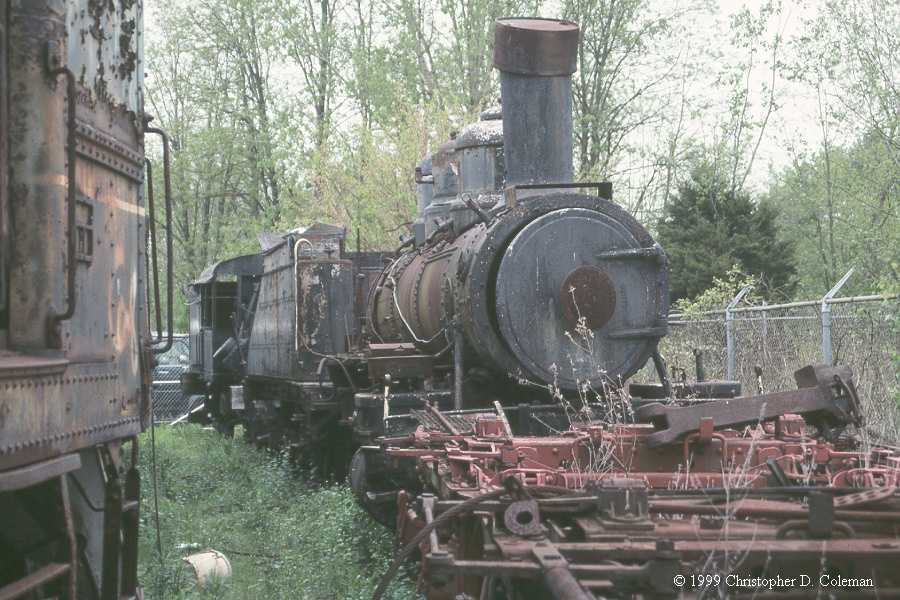
| Number: 6 (3rd) | Name: none | |
|---|---|---|
| Date Built: 1/1907 | Date Purchased: 1907 | Date Sold: 1975 |
| Line Built for: East Broad Top | Disposition: Unserviceable (WWV) | |
| Builder: Baldwin | Model: | Serial Number: 30046 |
| Style: coal fired steam | Type: Switcher | Wheel Arrangement: 0-6-0 |
| Track Gauge: 56.5" | Tractive Effort: 19,600 | Pressure/Power: 160 psi |
| Valve Gear/Transmission: Stevenson | Driver Size: 48" | Cylinder Bore: 17X24 |
| Weight: 84,200 | Engine Weight: | Adhesive Weight: |
| Grate: | Fuel Capy.: | Water Capy.: |
| Published Photos: EBT 76 | ||
Third #6 was built for the EBT in 1907 to replace the previous secondhand Second #6. #6 was an outdated design when built, using Stephenson valve gear and a lap-stem boiler. She operated as the only standard gauge shifter between the time Second #2 was sold and Third #3 was purchased in 1923. After that time she acted primarily as backup to #3, running when #3 was getting maintenance. Especially in the later years of the common carrier operations #6 was underpowered for the jobs assigned to her, frequently slipping ans sliding her way thought the maze of switches in the Mount Union Yard.
At the end of operations #6 was sealed up in the Mount Union Enginehouse with #3 until being sold to the Whitewater Valley Railroad in Indiana in 1975. The locomotive was loaded via a ramp built on the track of the Mount Union enginehouse lead, which remained into the late 1990s. The locomotive was loaded onto a Trailer Train flatcar and shipped out 3-14-1975. The sale price was reported as both $10,000 and $15,000. She was operated at Whitewater Valley for several years until an overhaul about 1980. While being rebuilt for more service, Indiana changed the state boiler laws outlawing #6's lap-seam type boiler and the work was halted. That law was later rescinded, but the work on #6 did not resume. Some reports note that there were additional issues in the frame or connecting rods, but those have not been substantiated. The frame, boiler, rods, tender and other large components are still together and stored outdoors in the WWV yard in Connersville. A replacement wood cab and all removed parts are stored indoors by the railroad
Reportedly, at one time The Whitewater Valley had expressed an interest in selling the loco and the Railroad Museum of Pennsylvania an interest to buy her, however no sale ever took place.
If returned to the EBT for operation, the locomotive would be subject the regulations of the Federal Railroad Administration. These regulations are laid out in the CFR - Code of Federal Regulations - the regulations that cover everything the federal government regulates. Relevant here is Title 49 (Transportation) Subtitle B (Other Regulations Relating to Transportation) Chapter II (Federal Railroad Administration, Department of Transportation) Part 230 (Steam Locomotive Inspection and Maintenance Standards) Subpart B (Boilers and Appurtenances). Specifically 230.30 (Lap-joint seam boilers) states "Every boiler having lap-joint longitudinal seams without reinforcing plates shall have sufficient lagging, jacketing, flues, and tubes removed at every annual inspection so that an inspection of the entire joint, inside and out, can be made, taking special care to detect grooving or cracks at the edges of the seams." More or less the level disassembly that has to be done to a butt-seam boiler for its 1372 operating day/15 year boiler inspection, has to be done to a lap-seam boiler every year, unless a waiver can be obtained from the FRA. The Eureka (Eureka & Palisade Railroad #4) did obtain such a waiver for its operation, but it is maintained in immaculate condition and such waivers are very rare. Without such a waiver it is generally impractical to operate a lap-seam boiler under FRA regulations.
49 CFR part 230 Subpart B - Boilers and Appurtenances regulations
In early August 2026 after many heavy rains, record flooding inundated the Whitewater Valley Railroad. The engine terminal area was flooded with several feet of water including EBT #6. Reportedly the more sensitive parts of the locomotive which were in storage, were high enough to not be affected. however many pieces of WWV's operation equipment were affected.
| Visit this search term record listing at the EBT Archvies and Special Collections |
|---|
| Reference Photos at the Archives - Click on image to visit record |
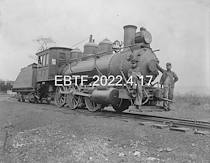
Reference AP198 
Reference AP5130 (Ed. note: 1946) 
Reference AP5381 (Ed. note: 8-7-1948) 
Reference AP775 (Ed. note: 1952) 
Reference AP4852 (Ed. note: 1955) 
Reference AP5129 (Ed. note: 7-14-1955) |
| Reference Diagrams at the Archives - Click on image to visit record |
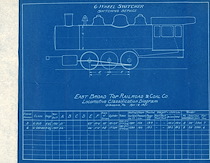
Reference AA111 |
Back to the EBT Locomotive Roster
